The game · one button, one decision
How a crash round works, from the bet to the bust
A crash round has three moving parts and only one of them is yours. The bet is locked before the curve starts, the crash point was decided before the curve starts, and the only thing you control is the moment you take the multiplier that is on screen.
This is an independent guide. It is not BC.Game, it is not operated by or affiliated with BC.Game, and it does not take deposits or run accounts.
Strip away the animation and a crash round is a timer with a price on it. The price goes up, and at some point the round ends. You either sold before that moment or you did not.
The three phases
- The betting window. A few seconds between rounds. You set a stake and,
if you want it, an auto cashout multiplier. When the window closes, the bet leaves your balance.
- The curve. The multiplier starts at 1.00× and climbs. Everyone in the
round sees the same number at the same time.
- The bust. The round ends at its crash point. Anyone who has not cashed
out loses the stake; anyone who has keeps stake × the multiplier they took.
That is the whole game. Every other element on screen — the round history strip, the list of other players, the chat — is decoration around those three phases.
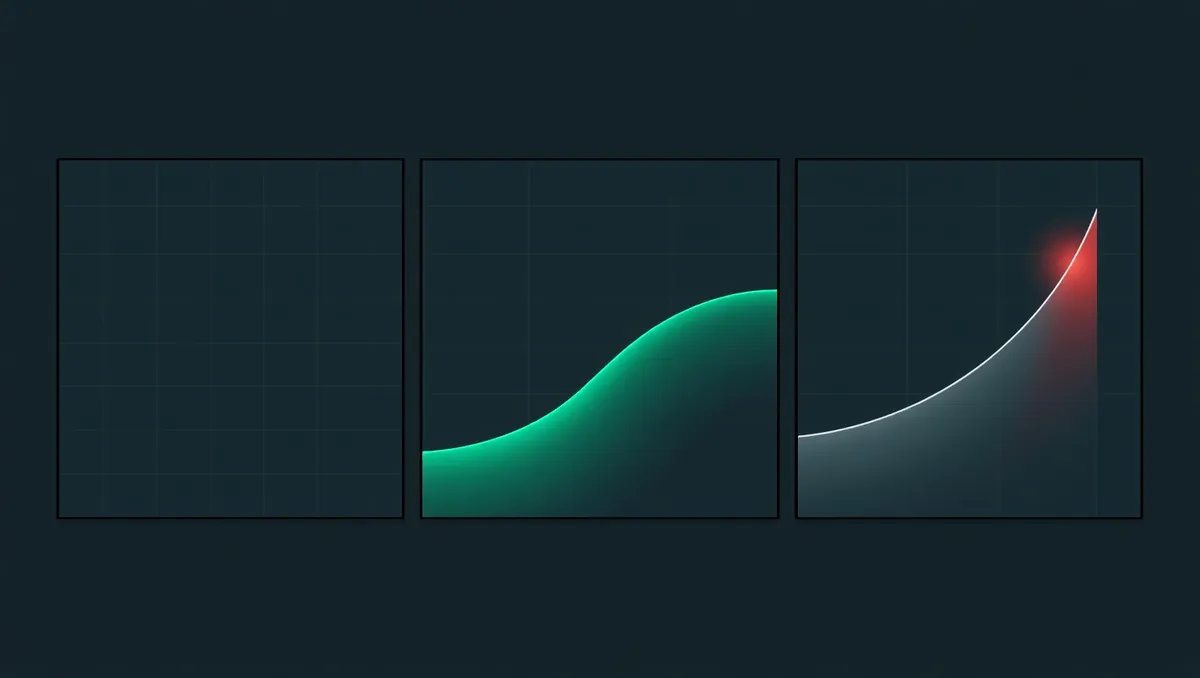
The crash point is already decided
This is the part that changes how the game should be read. In a provably fair crash game the crash point is derived from a server seed that the operator committed to before the round — usually as a hash published in advance. Your clicks, your stake size and the timing of your cashout do not move it.
What follows from that is worth saying plainly: there is no such thing as a round that was “about to” go higher. The round went where it went. You either took a slice of it or you did not. How to check that claim yourself, hash in hand, is on provably fair.
What the multiplier actually costs
In the standard crash construction, the chance of a round reaching a given multiplier falls in proportion to the multiplier itself. With a house edge of one per cent — the figure the operator states in its own fairness documentation — the share of rounds that reach X is about 99 ÷ X per cent:
| Cash out at | Rounds that get there | What that feels like |
|---|---|---|
| 1.10× | ~90% | Wins almost every round, gains 10% when it does |
| 1.50× | ~66% | Two rounds in three |
| 2.00× | ~49.5% | Slightly worse than a coin flip |
| 5.00× | ~19.8% | One round in five |
| 10.0× | ~9.9% | One in ten |
| 100× | ~0.99% | One in a hundred |
Read the table left to right and the game stops looking like a choice between “safe” and “risky”. Every row has the same expected value; what changes is the shape of your session. A 1.10× habit produces a long string of small wins and the occasional round that removes eleven of them. A 10× habit produces a long string of losses and the occasional round that pays for them.
Note what the table does not say: nothing about your evening. It describes the distribution across very large numbers of rounds, which is the only scale where the figure means anything.
Auto cashout
Auto cashout is the single most useful control in the game, and not for the reason it is usually sold. It does not improve the odds — nothing does. It removes the two things that actually cost money: reaction time, and the decision to wait “just a bit more” while a number is climbing in front of you.
Set it before the round. Setting it during the round is not a plan, it is a negotiation with yourself, and the counterparty always wins.
The round history strip
Above the curve, most crash games show the last few results as a row of coloured numbers. It is the most misread element on the screen. A row of low multipliers does not mean a high one is due; a row of high ones does not mean the game is “running hot”. Each round is drawn independently from the same distribution, and the strip is a record, not a forecast.
That misreading is the whole business model of the tools described on predictors and signals.
What is left to decide
Two things, both before the round starts: how much, and where you get out. The first belongs on responsible play, and the second is the subject of strategy and auto cashout.
The round described here is not unique to one title. What actually differs between crash games — and what only looks like it does — is on crash games compared.
Everything else — bonus balances that lock a withdrawal, the network a deposit travels on, the limit that applies when a big multiplier finally lands — sits outside the round and is covered on bonus and wagering and deposits and withdrawals. The full picture is on bc game crash game.