Claims to check · the biggest search cluster on this topic
App and APK searches: what people are looking for, and what they find
More people search for the app file than for the game itself. This page is about what that search returns, why a browser usually does the same job, and why this site links to no file at all.
This is an independent guide. It is not BC.Game, it is not operated by or affiliated with BC.Game, and it does not take deposits or run accounts.
The search numbers on this topic are lopsided. In the markets where the crash game is most searched, the app and APK phrasings outweigh every other query about it combined — including the name of the game. So it is worth answering carefully rather than dismissively.
Three different things, one search box
The operator's own app. Distributed from the operator's own domain, signed by them. Whether one exists, and where, is a question with exactly one reliable answer: the operator's own site.
A repackaged APK. The same app, taken apart and rebuilt by a third party, then posted on a download site. Sometimes it is only repackaged. Sometimes it carries an addition. From the outside the two are indistinguishable, and the signature that would tell them apart is the thing that got replaced.
A wrapper. An app that is a browser window pointed at the site, published under a similar name. Harmless at best, a credential-harvesting page at worst.
This site does not link to any of the three. Not out of caution about the first — out of the impossibility of telling you which one a given link is.
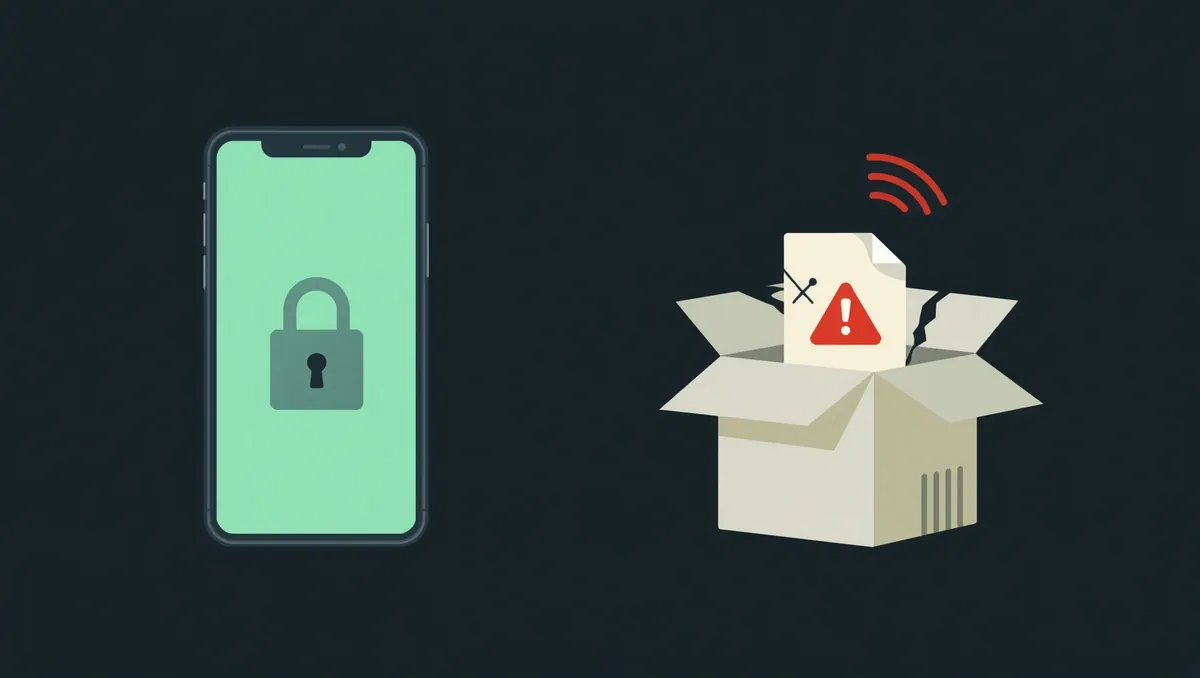
What the browser already does
Crash is a server-side game. The round is computed on the operator's machines; what your phone does is draw a curve and send two messages — a bet and a cashout. That is a job a mobile browser does completely.
The practical upshot: open the site in the phone's browser, add it to the home screen, and you have an icon that launches full-screen with no install, no permissions and no file of unknown provenance. There is one thing the browser does not do, and it is worth naming: push notifications about promotions. That is the actual feature difference for most casino apps.
What an installed file gets that a browser does not
| Capability | Browser | Installed app |
|---|---|---|
| Playing the game | Yes | Yes |
| Full-screen icon on the home screen | Yes, via «add to home screen» | Yes |
| Promotional push notifications | No | Yes |
| Access to files, contacts, SMS if granted | No | Whatever it asks for |
| Ability to be modified by a third party before you install it | No | Yes, and this is the whole risk |
The last two rows are the trade. An app is a program with permissions; a page is a page.
The risk, stated once and plainly
A casino-branded APK from a download aggregator is one of the most reliable malware delivery formats there is, because the person installing it has already decided to ignore the warning their phone shows. The payload people describe afterwards is usually the same: credentials and wallet seed phrases.
There is a neighbouring search cluster — «hack», «mod», «predictor» versions of the same file — and it is covered on predictors and signals. The short version: a client-side file cannot change a result computed on the server, so the only thing such a file can do to your session is nothing, and the only thing it can do to your phone is everything.
If you want the app anyway
One rule covers it: the operator's own domain is the only source, and their own domain is also the only place that tells you whether an app exists for your platform at all. Anything else in the results — including pages that look identical to the operator's — is a third party.
While you are checking sources, the same scepticism applies to the round itself, and there the check is genuinely available: see provably fair. What the game does once you are in it is on how the round works. And if the file was never the point, the crash game itself is where to start instead.